AI detectors have become widely used in academic environments, especially after tools like ChatGPT made content generation fast and accessible. Schools, universities, and educators now rely on these systems to identify whether a student’s work was written by a human or generated by AI. The assumption is that these tools are precise, objective, and reliable.
The reality is less comfortable. AI detectors are not designed to provide certainty, but probability. When people ask “are AI detectors reliable,” what they are really asking is whether these tools can consistently distinguish between human and AI writing. The answer depends heavily on context, writing style, and how the text was created or edited.
Do AI Detectors Actually Work?
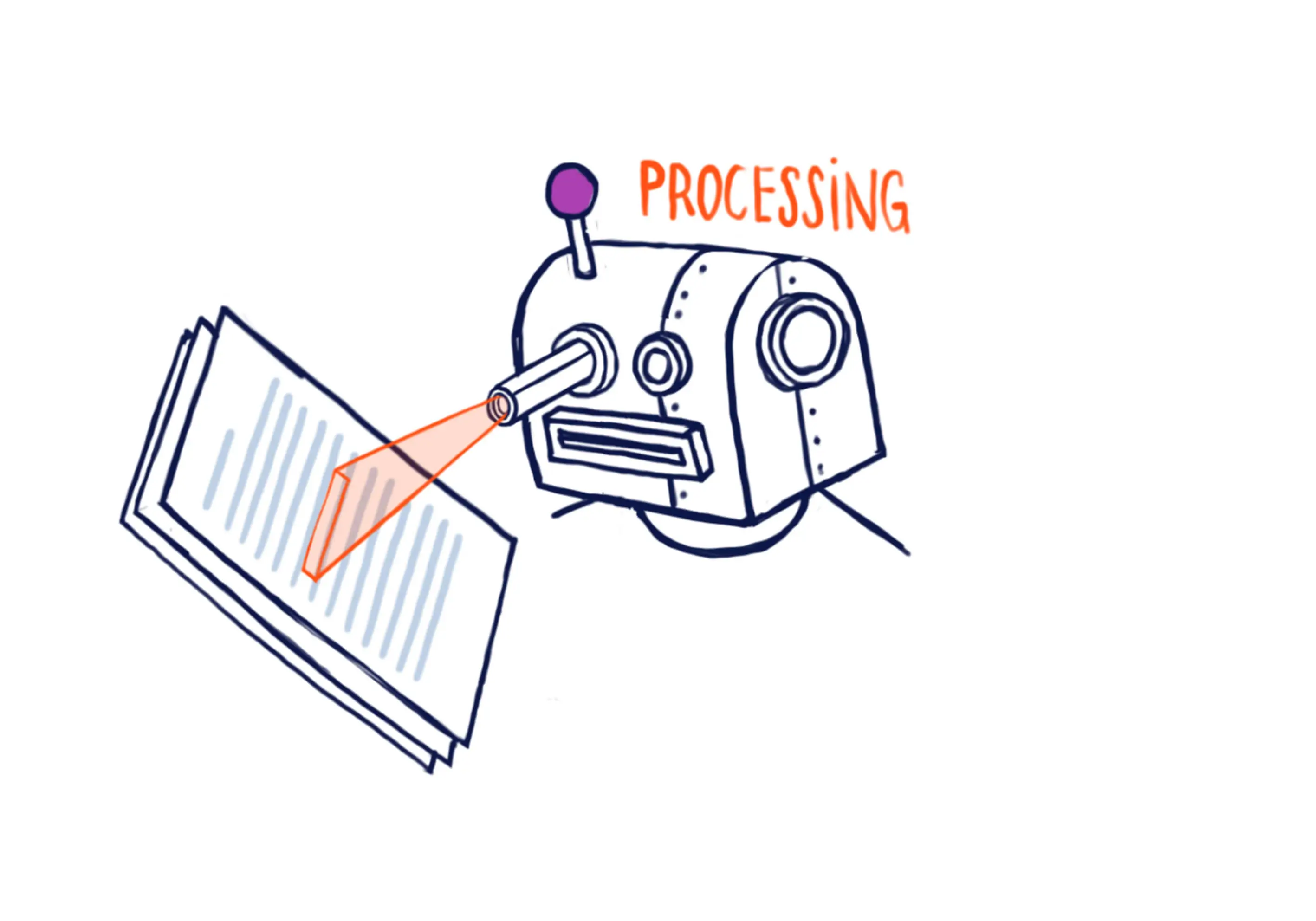
AI detectors do work, but not in the way most people expect. They do not “detect AI” as a definitive source. Instead, they analyze statistical patterns in the text and compare them to known characteristics of machine-generated content.
Most detectors evaluate factors like predictability, sentence structure, and variation. For example, AI-generated text often has lower randomness and more consistent phrasing. Based on these signals, the system assigns a probability score, such as “85% likely AI-generated.”
So when asking “do AI detectors actually work,” the correct answer is yes, but only as probabilistic tools. They are not verification systems, and they cannot confirm authorship with 100% accuracy.
How Accurate Are AI Detectors in Academic Settings?
Accuracy varies significantly depending on the tool and the type of text being analyzed. Some AI detectors claim accuracy rates of 90–98%, but these numbers are often based on controlled datasets rather than real-world academic writing.
In practice, studies and independent tests suggest accuracy can drop to 60–80% when dealing with edited or mixed-content text. This means that out of 10 academic papers, 2–4 could be incorrectly classified, either as false positives or false negatives.
The question “how accurate are AI detectors” does not have a fixed answer. Their performance depends on factors like text length, complexity, and whether the content has been rewritten or humanized.
Key Factors That Affect AI Detector Reliability
| Factor | Example | Impact on Accuracy |
|---|---|---|
| Text Length | 100 vs 1,000 words | Short texts reduce accuracy by 20–40% |
| Editing Level | Raw vs edited AI text | Editing can reduce detection success by 30–60% |
| Writing Style | Formal vs creative | Formal writing may appear “AI-like” |
| Language Proficiency | Native vs non-native | Simpler language increases false positives |
| Model Evolution | GPT-3 vs GPT-4+ | Newer models are harder to detect |
For example, a 1,500-word academic essay generated by AI and lightly edited may bypass detection entirely. At the same time, a human-written essay using simple, structured language could be flagged as AI-generated. This contradiction is exactly why people keep asking, “are AI checkers accurate,” and keep getting unsatisfying answers.
False Positives and False Negatives Explained
Two key problems define AI detector reliability: false positives and false negatives.
A false positive occurs when human-written content is incorrectly flagged as AI-generated. This is particularly common in academic writing, where structure, clarity, and neutrality resemble AI output. Some reports suggest false positive rates can reach 10–30%, especially for non-native English writers.
A false negative occurs when AI-generated content is classified as human-written. This happens more frequently with edited AI text, where small changes disrupt detectable patterns. In some cases, detection failure rates can exceed 40–50% after moderate rewriting.
These two issues combined make it difficult to rely on AI detectors as a single source of truth. They are prone to both overestimating and underestimating AI involvement.
Are AI Detectors Reliable for Academic Integrity?
From an academic integrity perspective, reliability is not just about accuracy. It is about whether the tool can be trusted in high-stakes decisions.
Most institutions treat AI detector results as supporting evidence rather than proof. This is because even a 90% accuracy rate still implies 1 in 10 results could be wrong, which is too high for disciplinary action. When asking “are AI detectors reliable,” the more precise answer is that they are useful indicators, not definitive judgments. Their role is to flag potential issues, not to make final decisions.
Why Academic Writing Is Harder to Detect?
Academic writing creates a unique challenge for AI detection systems. It is structured, formal, and often follows predictable patterns, which are the same characteristics detectors associate with AI.
For example, academic texts often use:
- Clear topic sentences
- Logical transitions
- Neutral tone
- Repetitive phrasing
These features can lower perplexity and increase consistency, making human writing look statistically similar to AI-generated content. As a result, even authentic essays can be flagged incorrectly. This is one of the main reasons why people question “is AI detector accurate” in academic contexts specifically.
When AI Detectors Are Most Useful?
- Screening large volumes of student submissions
- Identifying unusually consistent writing patterns
- Supporting academic review processes
- Providing an additional layer of analysis
Despite their limitations, AI detectors still have practical use cases when applied correctly. In these contexts, they function as filters rather than decision-makers. Their value comes from highlighting anomalies, not delivering final verdicts.
The Future of AI Detection in Education
AI detection technology is evolving, but so is generative AI. Future systems may combine multiple approaches, including behavioral tracking, metadata analysis, and watermarking techniques.
However, even with improvements, it is unlikely that detectors will reach 100% accuracy. The complexity of human language and the adaptability of AI models make perfect detection unrealistic. This suggests that the future of academic integrity will rely less on detection alone and more on assessment design, such as oral exams, in-class writing, and process-based evaluation.
Takeaways
AI detectors for academic text are useful but not fully reliable. They operate on probability, not certainty, and their accuracy can vary from 60% to over 90% depending on context and text characteristics.
False positives and false negatives remain significant challenges, especially in academic writing where human and AI styles often overlap. This makes it risky to rely on AI detectors as the sole basis for evaluation.
Understanding how these tools work is essential. They are best used as indicators within a broader system, not as standalone solutions for determining authorship.